.png)


How Singapore’s oldest preschool has been preserved for more than a century
"I planted the seed, Apollos watered it, but God made it grow. So neither he who plants nor he who waters is anything, but only God, who makes things grow." 1 Corinthians 3:6-7
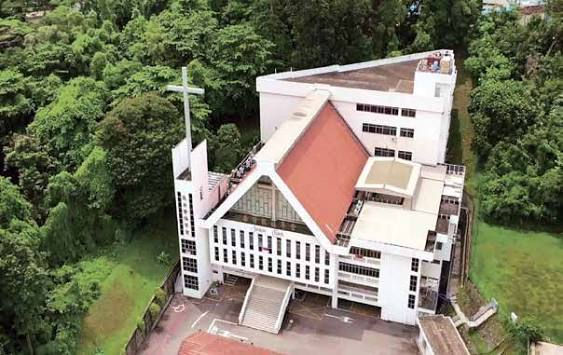
In a city where buildings disappear, schools merge, neighbourhoods change and educational trends come and go, The Chinese Kindergarten remains, atop a gentle hill along Outram Road.
However, it does not remain untouched and it was not always there. Since its founding, it has changed addresses, lost buildings, adapted programmes, weathered war, shifted with policy changes, survived enrolment pressures and entered multiple new seasons of leadership.
Founded on 11 October 1921, The Chinese Kindergarten is known as Singapore’s first kindergarten. More than a century later, its story is not merely one of historical significance. It is a story of preservation of a school, yes, but ultimately of a mission that God has kept through generations.
The story of The Chinese Kindergarten began with a burden.
The planting of a seed
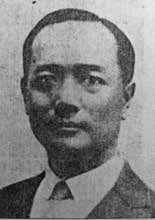
In the early 1920s, Mr Xu Dongfan, a Christian teacher from Hubei, China, was teaching in Singapore when he noticed a gap in the local education landscape. While much attention was given to primary education, there was little emphasis on preschool education, much less a school meant for kindergarteners.
He believed children could be given a stronger foundation if they were nurtured earlier.
That conviction found support among church leaders and members of the Chinese Christian community. Together, they raised funds, found a site and began what would become The Chinese Kindergarten.
It was a modest beginning. The school started in a one-storey building near Tanjong Pagar Church, the predecessor of Jubilee Church. But from the beginning, the vision was larger than the space. The founders were not merely starting a school. They were responding to a need. They saw children who needed to be nurtured, families who needed support, and a community that could be served through education.
In the language of Scripture, they planted. And over the next century, many others would water.
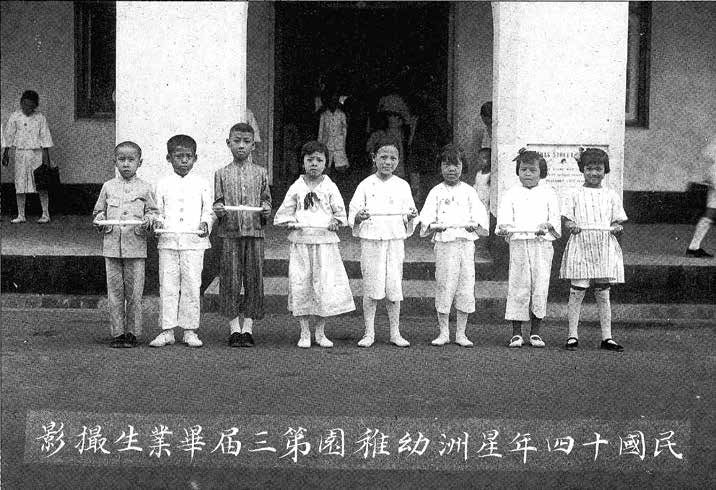
Watered by many hands
The Chinese Kindergarten quickly outgrew its first premises.
As more parents began sending their children to the school, classroom space became insufficient. The kindergarten had to make use of the adjoining Tanjong Pagar Church premises for classes.
The board later decided that a new building was needed. Funds were raised through donors and church networks. When the amount was still insufficient, Rev Tay Ping Teng and Rev Tan Leng Tian approached Rev John A. B. Cook, who appealed to the colonial government for assistance.
The government granted a site at Tras Street and contributed half of the building cost. Construction began in 1924 and the new building was completed in 1925.
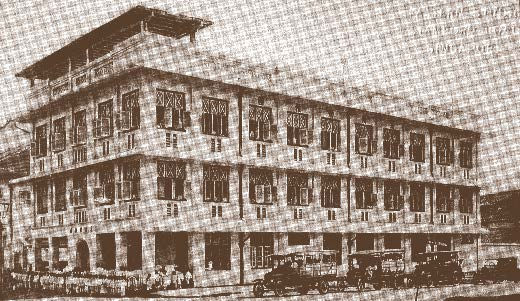
It was a significant milestone. The new three-storey building had classrooms, a hall, an office and other facilities. By then, enrolment had grown to more than 500 children, with more than 20 staff. In 1927, a primary section was added so that children graduating from the kindergarten could continue their primary education within the same institution.
It was also reportedly the first school in Singapore to provide school bus transport for students across the island.
This was a practical innovation that reflected a simple concern: How could children come to school safely?
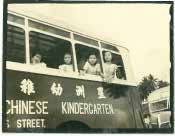
From the beginning, the school was sustained by a combination of vision, sacrifice and practical care. Pastors, educators, donors, church leaders and community members each played a part.
No single person preserved the work. God used many hands.
Interrupted but not ended
Then came war.
When Singapore fell to the Japanese in 1942, schools across the island closed. The Chinese Kindergarten ceased operations during the Japanese Occupation.
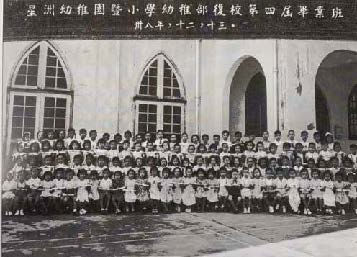
But after the war, the kindergarten resumed classes on 10 October 1945. In the post-war years, Singapore’s baby boom brought a sharp increase in student numbers. The Chinese Kindergarten, like many schools at the time, responded to the need by operating morning and afternoon sessions to accommodate the children.
In 1946, with the completion of Jubilee Church on Outram Road, the kindergarten operated a preschool there as well. By 1949, The Chinese Kindergarten had more than 1,600 students at its main premises. Together with the Jubilee Church preschool, it had more than 2,000 students, making it one of the largest and most established schools in Singapore at the time.
What had been interrupted by war began to grow again!
Being preserved through the losses
But the story of The Chinese Kindergarten is not only a story of growth.
By the 1970s, the education landscape had changed. English-medium education was becoming increasingly important to parents. Many Chinese schools saw falling enrolment. The Chinese Kindergarten’s primary section did not escape unscathed. At the end of 1978, the primary section closed.
Then came another blow.
In the mid-1980s, the Tanjong Pagar area was designated for conservation and redevelopment. The Tras Street site was to be acquired. The board tried to appeal for the school to remain and continue using the premises for educational purposes, but the appeals were unsuccessful.
Jubilee Church had already experienced such displacement. In the early 1970s, it had relocated from another part of Outram Road after its former site was acquired for the construction of the Central Expressway. The current Jubilee Church building, where the school continues today, is therefore a later home and not the same premises as the earlier Outram Road branch.
In 1991, after 70 years at Tras Street, The Chinese Kindergarten moved fully to the current Jubilee Church premises on Outram Road. The school operates on a smaller scale. A building was lost. Physical memories of The Chinese Kindergarten’s humble beginnings were erased.
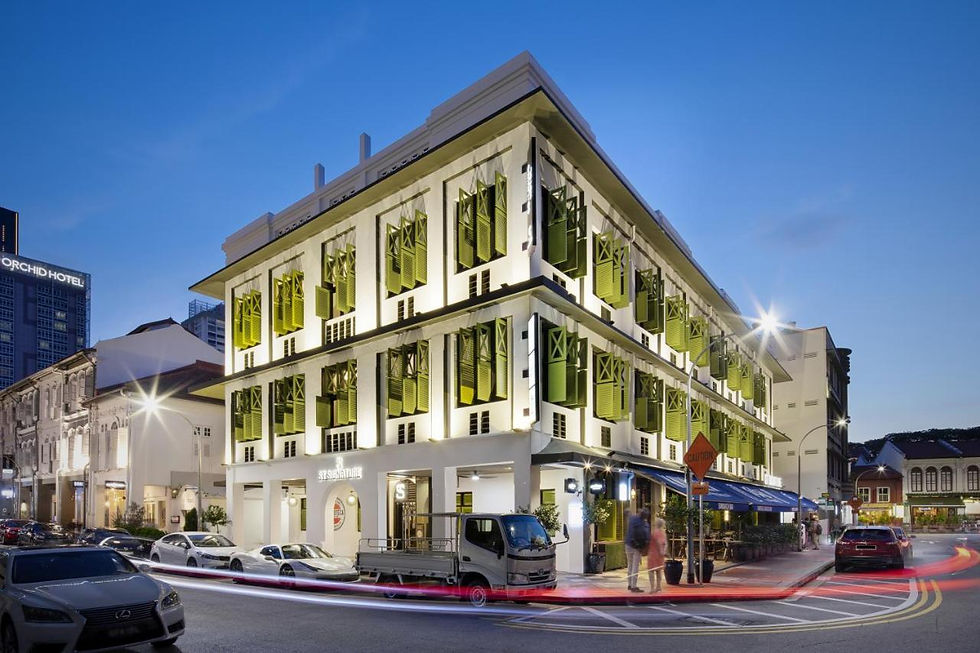
But the kindergarten was survived and it’s education mission continued, though in different forms.
Perhaps this is one of the clearest signs of God’s preservation. His preservation was never about keeping every classroom, every building or every programme. He preserved the calling.
God kept the seed watered
The school is never made up of its bricks, its curriculum or even enrolment numbers.
Through the years, the school was preserved because of the multitude of people who were willing to say yes and to keep on watering the seed. The school remains steadfast in its mission because multiple people remained faithful.
Former principal Mrs Wong-Thng Lay Choo (2004 – 2019) did not set out to lead the school. She had taught and taken on part-time roles in the kindergarten. In fact, was completing a teacher’s training practicum overseas and had cut short her trip to fly back to Singapore for her predecessor’s funeral.
It was at the memorial service when she was unexpectedly handed the keys to the school premises by the Chairman of the Board at that time. The request was that she takes over as Principal so that the school could be kept running.
She stepped into leadership because “someone just had to do the job”.
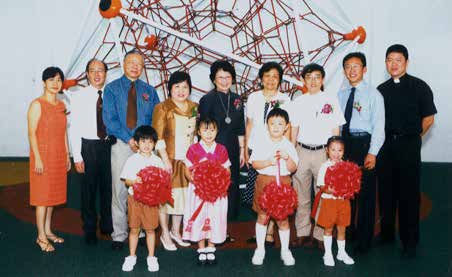
“Someone just had to do the job” is a simple line. But it captures much of the spirit behind The Chinese Kindergarten’s preservation.
When asked if she was ever fearful that one day the kindergarten would close down, she let out a hearty laugh and said, “With Elder Jonathan (Lee) here, it will never close down!”
Elder Jonathan Lee who was the Chairman of the board that oversees The Chinese Kindergarten for 15 years had reassured Mrs Wong multiple times, reminding her of the mission.
The instruction was steady: Keep doing the work. Love the children. Teach them what they need to know.
She also saw the relationship between principal and the school management as part of Christian witness. Faith, she said, had to be worked out in day-to-day life. The principal and management had to work closely and demonstrate their Christian faith not only in formal teaching, but in how they led, cared and made decisions.
This is the same conviction that fuelled her successors’ work.
Elder Jonathan, who continues to be on the board even after stepping down as the Chairman last year, also saw the work as more than institutional survival.
To him, success was not simply enrolment numbers or financial profit. The deeper test was whether children grew up with the right teaching from the Lord. If non-Christian families became open to learning more about the Christian faith, that was a blessing. The heart of the work was always the gospel.
He also acknowledged the cost. Serving on the board required time, emotional energy, financial oversight, governance work and repeated explanation to those who did not always understand the kindergarten’s history or ministry. Preserving the preschool even when it is not financially viable is a counter-cultural move, even among fellow believers.
It was, in his words, the kind of work that could feel 吃力不讨好 - laborious and thankless, with nothing to gain given that the fruit of the labour poured into young children will only grow into fruition some decades later. Yet he remained convinced that Christian preschools should not give up easily.
Unless God says stop, he said, the work should continue.
But why?
Beyond history and a Christian preschool
Rev Wong Siow Hwee, the previous Senior Minister of Jubilee Church, reflects that it is important that The Chinese Kindergarten is preserved because it is an inheritance the church has received. Its founders saw a need in the community and responded. But as a church, the preschool is a way for Christians to love the community.
That conviction still matters. In a meritocratic society where children are often measured by achievement, Christian education offers a different way of seeing the child: not first by merit, but as one made and loved by God.
But history alone is not enough.
Ms Katherine Seow, who led the school from 2019 to 2024, frames the question plainly: "What is God's vision for this preschool in this generation?"
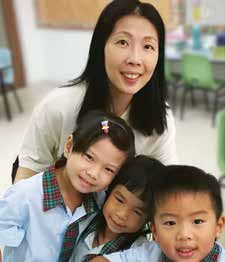
It is not enough to preserve the school simply because it is old, or because it is Singapore's first kindergarten. While its heritage is significant and worth honouring, heritage alone cannot define its future. God's heart has always been for little children.
The deeper question is how the church is called to live out that heart through this preschool in this generation.
For Katherine, this means helping children grow in truth, love and courage. In a world of competing voices, children need to learn not only what is true and right, but also how to live out those convictions with Christ-like love, kindness and grace. Through the ministry of the preschool, she believes the church has a unique opportunity to nurture children whose lives are shaped by both truth and compassion from their earliest years.
For Rev Wong, evangelism may be a fruit of the work, but it is not the only reason the school exists. The deeper conviction is that this is God’s world, and good education helps children see the beauty of the world and of life.
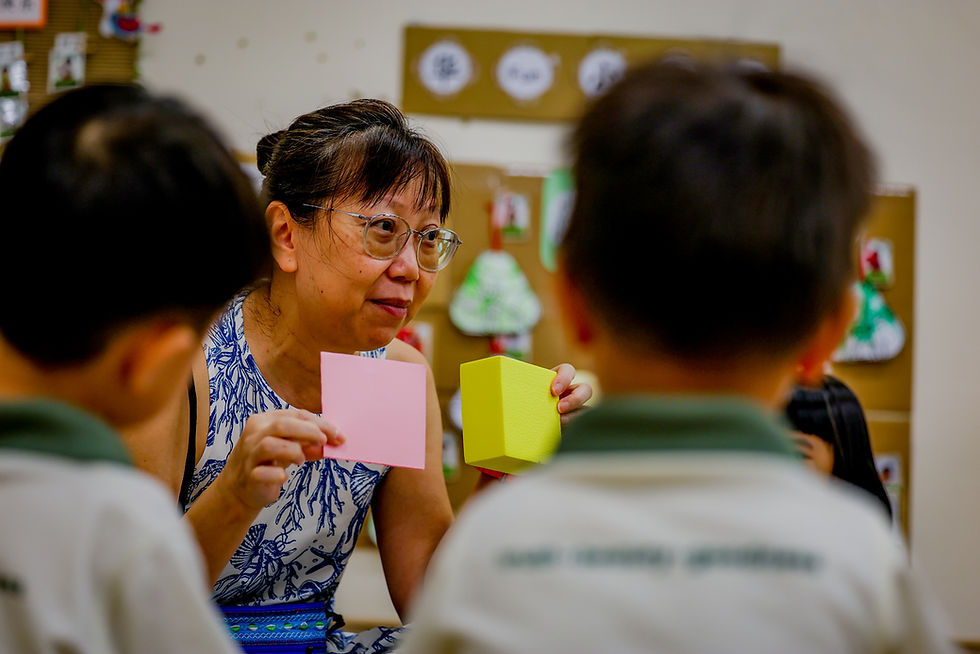
To preserve the school, then, is not merely to protect a name, a building or a legacy. It is to preserve a window through which the church can love families, serve the neighbourhood and bear witness to God’s heart for children.
Other forms of community work may continue. But if The Chinese Kindergarten is lost, this particular witness: daily, formative, child-facing and family-serving, would be lost too.
The founders understood education as an act of love for the community. The question now is what that love requires today.
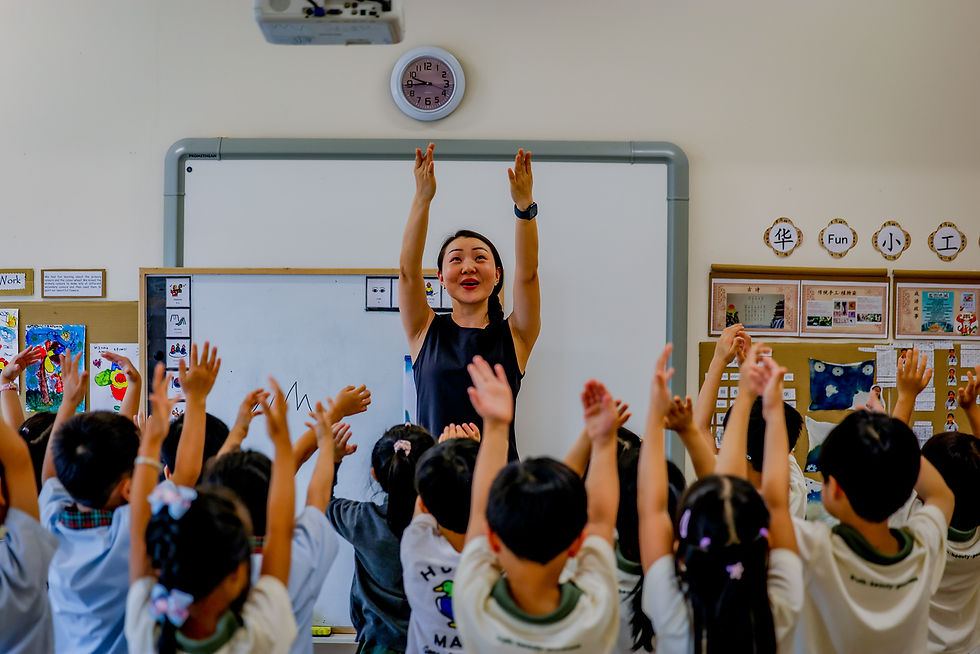
What is The Chinese Kindergarten preserved for?
To preserve Chinese Kindergarten does not mean to freeze it in 1921, 1949 or 1991.
Ms Ramona Chan, who entered the work from Presbyterian Preschool Services in 2024, described the task as “a very big pair of shoes to fit”. Stepping into The Chinese Kindergarten was not simply about improving systems. It also meant finding her place in a school with deep history.
She initially thought she might have to start from ground zero. Instead, she found that the harder work was unlearning: helping staff adapt from one way of operating to another, while still honouring what had been carried before.
This is what preservation often requires, the discernment to ask: What must be kept? What must be released? What must be renewed so the mission can continue?
Through the years, the school was preserved because of the multitude of people who were willing to keep on watering the seed that was planted.
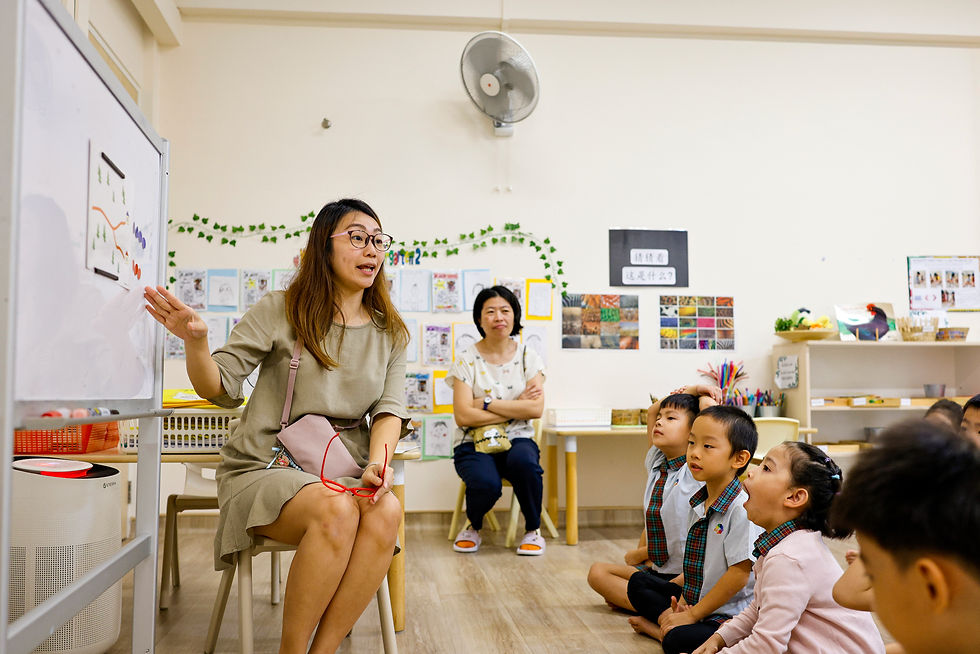
Ms Anita Kaur, the 15th and current principal of the school, echoes Mrs Wong’s feelings of stepping up simply because someone needs to do the job. Similarly, she has never aspired to be a Principal. But her saying yes to being one of the hands that continues to water the century old plant that is The Chinese Kindergarten is one of the ways God continues to preserve the school.
She admits that she stands on the shoulders of giants and she is merely continuing the mantle of serving the community – very much in the ways the founders and missionaries were convicted to do, only in a vastly different context.
While The Chinese Kindergarten in its founding years stepped up to fill the lack of preschools in Singapore, she aspires for the school today to teach “hope” to the children; that the children are loved and have a future and can have direct access to a God who loves them.
Until God says stop
More than a century after its founding, The Chinese Kindergarten is no longer the large school it was in its most crowded years. Its primary section is gone. Its Tras Street building belongs to a slowly forgotten chapter of Singapore’s urban history. The preschool landscape around it is more competitive and complex than its founders could have imagined.
Yet the kindergarten remains.
To Rev Wong Wee Khong, current Senior Minister of Jubilee Church, the school is like “an infant born and raised by Jubilee Church”. Though the relationship between church and kindergarten has taken different forms over the years, the connection has always remained. Church members served on its board. Many in the church paid the price for the school to continue. Through it, the church has been able to bless children, families and the wider community.
“It is not an entrepreneurship or business,” he said. “It is a ministry.”
That is why, if the church can carry on the work, it must. “Whatever resources we should put in, we will put in,” he said.
Yes, the church will remain even if the school closes down. Jubilee Church would still worship, teach, fellowship, serve and engage in mission. But it would lose a particular window into the community, one that God had already entrusted to them.
“If we lose church preschools, we lose sight of the whole,” he said.
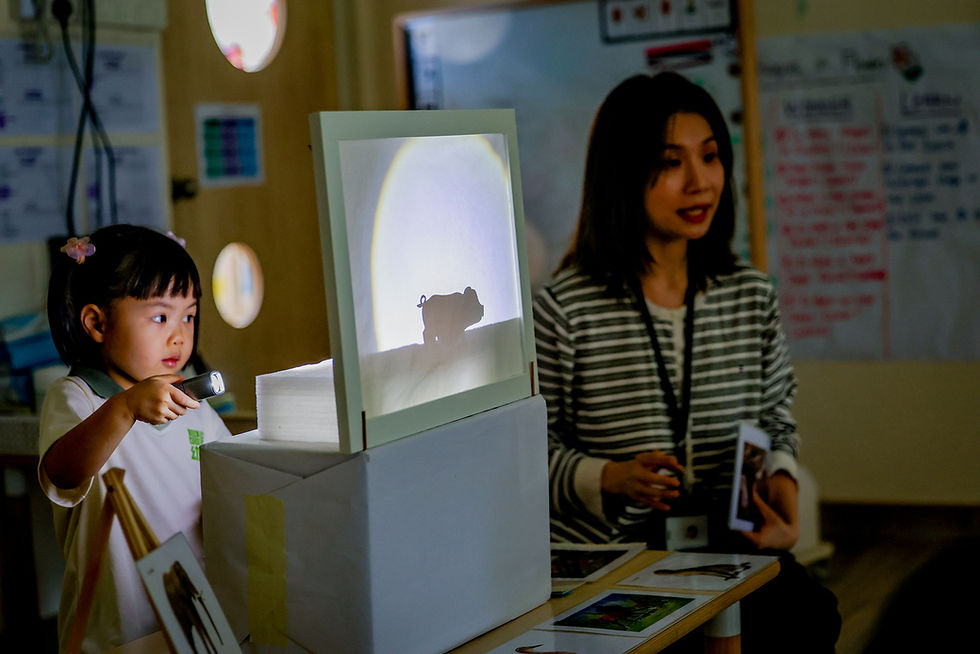
Education, he added, cannot be complete if it concerns itself only with knowledge. For a church-based preschool, the deeper question is how children are introduced to Christ, and from there, how they are formed in truth and values.
But this does not mean the school can simply lean on its past. Rev Wei Khong is clear that the church must adjust its mindset. The school has had its “glory days”, but faithfulness today requires wisdom to adapt: in its mental model, branding, administration and operations, so that children and families can continue to trust TCK and benefit from its education.
Yeo Dai Yun, the current Chair of The Chinese Kindergarten’s Board, carries that question in the present tense. For her, preservation for its own sake is the wrong reason to continue.
“If there is no distinctly faith-shaped difference, there is no reason to continue,” she said.
It is a searching line, because it names the real question before Chinese Kindergarten today. The task is not to preserve a brand, a name, or even a beloved institution at all costs. CK must not simply replicate what private or secular preschools offer. Its calling must shape not only what children are taught, but how teachers are treated, how families are served, and how the school walks through transition.
To her, a child who is well-loved will learn well. That conviction must shape not only how children are taught, but how teachers are treated.
Teachers, Dai Yun believes, are the frontline of the school’s mission. They are the ones children and parents encounter every day. If they leave, the programme collapses. And if they are treated merely as manpower to be moved around, something of the school’s witness is already compromised.
The challenge, then, is not only curriculum, enrolment or finances. It is whether the school can become the kind of place where people want to work because they are valued, included in the vision and treated with dignity.
This has become especially important as they work through its partnership with Presbyterian Preschool Services and Little Olive Tree. The partnership was formed in 2024 to help faith-based preschools benefit from the collective load of certain operational aspects of running the preschool. Principals and staff can also benefit from a wider community of practitioners to support them in their day to day teaching.

But transition has not been painless. Changes in brand, uniform, operations and vision raised hard questions of identity: If you only keep your name, are you still The Chinese Kindergarten?
For Dai Yun, the answer lies not in preserving the old form at all costs, but in remaining true to the original calling in new forms.
Without the Lord, the builders build in vain
Again and again, the school could have ended.
But God preserved it through founders who saw the need for early childhood education before it was widely valued. Through pastors who raised funds and appealed for land. Through principals who carried the school through difficult seasons. Through board members who served when the work was unseen. Through teachers who loved children in the ordinary rhythms of each day. Through parents and alumni who remembered not only what they learnt, but how they were loved.
And now, He continues to preserve it through another generation learning to receive the same inheritance with open hands; not as a museum piece, but as a living ministry.
The story of The Chinese Kindergarten is, in the end, not simply the story of Singapore’s first kindergarten.
It is the story of how a seed was planted in faith.
One generation planted. Another watered. Another rebuilt. Another relocated. Another adapted. Another held on.
But ultimately, it was God who gave the growth.
And as Dai Yun reflected, the point is not only whether the school reaches a desired outcome, but how faithfully the journey is walked.
And so, unless God says otherwise, the little school He has preserved will continue to receive the little children He loves.
The Chinese Kindergarten is supported by Presbyterian Preschool Services, as we serve with a shared commitment to Truth, Beauty, and Goodness for our children, parents and families, and educators. We believe deeply in the calling of every faith-based preschool: that a child’s truest foundation is rooted in God’s Word. We remain committed to planting seeds of faith in young hearts through the way we teach, the way we lead, and the way we love.


