.png)


Gratitude Journaling for 5-Year-Olds: Nurturing Thankful Hearts at Home
Table Of Contents
Understanding Gratitude Development in Young Children
Benefits of Gratitude Journaling for 5-Year-Olds
Creating a Simple Gratitude Journal at Home
7 Gratitude Prompts Perfect for 5-Year-Olds
Integrating Biblical Perspectives on Thankfulness
Making Gratitude a Family Routine
Addressing Challenges and Questions
Extending Gratitude Beyond the Journal
Gratitude Journaling for 5-Year-Olds: Nurturing Thankful Hearts at Home
As parents, we all desire to raise children who recognize and appreciate the blessings in their lives. At age five, children are at a beautiful developmental stage where they're becoming more aware of others' feelings, developing empathy, and beginning to understand abstract concepts like thankfulness. Gratitude journaling offers a wonderful opportunity to nurture these emerging capabilities while creating precious moments of connection with your child.
Gratitude is more than just saying "thank you" – it's a heart posture that recognizes God's goodness and the blessings we receive daily. The practice of gratitude journaling can help your 5-year-old develop a foundation of thankfulness that will serve them throughout life, fostering joy, resilience, and a deeper understanding of biblical values.
In this article, we'll explore practical, age-appropriate ways to introduce gratitude journaling to your 5-year-old at home. We'll share creative prompts, simple journal ideas, and thoughtful approaches to make thankfulness a natural part of your family culture – all while supporting your child's holistic development in truth, beauty, and goodness.
Understanding Gratitude Development in Young Children
Before diving into the practical aspects of gratitude journaling, it's helpful to understand how thankfulness develops in young children. At around age five, children are in a critical period for emotional and social growth. They're beginning to recognize that others have different perspectives and feelings, which is an essential foundation for genuine gratitude.
Young children initially understand gratitude in concrete terms – being thankful for toys, treats, or special experiences. As they develop, with gentle guidance, they can begin to appreciate less tangible blessings like relationships, kindness, or the beauty of God's creation. This progression from material gratitude to relational and spiritual thankfulness mirrors the biblical principles of recognizing all good gifts as coming from our Heavenly Father.
Children at this age learn primarily through observation and participation. When they see parents and caregivers expressing genuine thankfulness, they begin to internalize this practice. Creating a simple gratitude journal provides a tangible way for 5-year-olds to participate in and practice gratitude regularly, helping to establish neural pathways that make thankfulness more natural over time.
Benefits of Gratitude Journaling for 5-Year-Olds
Introducing your 5-year-old to gratitude journaling offers numerous benefits that extend far beyond the activity itself. Research consistently shows that gratitude practices positively impact both emotional well-being and character development.
For young children specifically, regular gratitude journaling can:
Increase awareness of blessings and good things in their lives, fostering a positive outlook
Develop language skills as they articulate what they're thankful for
Strengthen the parent-child bond through meaningful conversations
Build emotional vocabulary as they connect feelings with experiences
Establish foundations for spiritual growth and biblical understanding
Reduce negative behaviors by shifting focus to positive aspects of life
Create memories and keepsakes that capture their unique perspective
From a biblical perspective, practicing gratitude helps children recognize God's provision and goodness in their daily lives. As Psalm 136:1 reminds us, "Give thanks to the Lord, for he is good, for his steadfast love endures forever." By helping your child notice and record things to be thankful for, you're nurturing their spiritual formation in alignment with biblical teachings about thankfulness.
Creating a Simple Gratitude Journal at Home
The beauty of gratitude journaling with a 5-year-old is that it doesn't require expensive materials or complicated processes. The focus should be on creating a meaningful experience rather than a perfect product.
Here's how to create a simple, age-appropriate gratitude journal at home:
Materials You'll Need
Start with basic supplies that are easy for small hands to use:
A notebook with blank pages (spiral-bound works well for durability)
Colored pencils, crayons, or washable markers
Stickers (optional but engaging for young children)
A special box or folder to store completed journal pages
Setting Up the Journal
Keep the format simple and flexible for your 5-year-old:
Create a personalized cover together. Let your child decorate it with their name and drawings that represent things they're thankful for. This establishes ownership and excitement about the journal.
Divide each page into two sections – one for drawing and one for writing. At this age, drawing is often easier than writing, so giving space for both allows for full expression.
Consider pre-writing a simple prompt at the top of each page, such as "Today I am thankful for..." This provides structure while allowing creativity.
Date each entry. This creates a chronological record that you'll both treasure looking back on as your child grows.
Adapting for Different Abilities
Remember that 5-year-olds vary widely in their writing abilities. Some may be able to write a few words independently, while others will need more assistance. Here are adaptations to consider:
For children who are not yet writing: Have them dictate their gratitude thoughts to you while you write them down. Read the words back to them, pointing to each word as you read.
For emerging writers: Write their thoughts in light pencil for them to trace, or draw dots for them to connect to form letters.
For more confident writers: Encourage them to sound out and write simple words, offering help with spelling as needed, but focusing more on the expression than perfect spelling.
7 Gratitude Prompts Perfect for 5-Year-Olds
One of the challenges in gratitude journaling with young children is knowing what questions to ask. The right prompts can open up meaningful conversations and help children recognize blessings they might otherwise overlook. Here are seven age-appropriate prompts specifically designed for 5-year-olds:
"Draw something that made you smile today." This prompt connects gratitude with joy and helps children recognize positive emotions.
"Who helped you today? What did they do?" This encourages awareness of relationships and the kindness of others.
"What is your favorite thing to eat? Why are you thankful for it?" Food is concrete and relatable for young children, making this an accessible entry point for gratitude.
"Draw a picture of your favorite place in nature. What do you love about it?" This prompt helps children connect thankfulness with God's creation.
"What is something your body can do that you're thankful for?" This builds body positivity and appreciation for health and abilities.
"Who in our family are you thankful for today? Why?" This strengthens family bonds and helps children articulate appreciation for loved ones.
"What is something you have that some children don't have?" When approached sensitively, this helps develop awareness of blessings we might take for granted.
When using these prompts, remember that the goal isn't to elicit profound insights, but rather to create awareness and conversation about gratitude. Let your child's responses guide further discussion, asking gentle follow-up questions that deepen their thinking.
Integrating Biblical Perspectives on Thankfulness
For families seeking to nurture faith alongside gratitude, the Bible offers rich resources for helping children understand thankfulness from a biblical perspective. Scripture is filled with examples and teachings about gratitude that can be simplified for young minds.
Here are some ways to naturally incorporate biblical perspectives into your gratitude journaling practice:
Simple Scripture Verses
Select brief, memorable verses about thankfulness to share with your child. You might write one at the beginning of each week's journal entries or refer to them during your conversations. Some child-friendly options include:
"Give thanks to the Lord, for he is good." (Psalm 107:1)
"This is the day the Lord has made; let us rejoice and be glad in it." (Psalm 118:24)
"Every good and perfect gift is from above." (James 1:17)
Keep explanations simple, helping your child connect the verse to their everyday experiences of gratitude.
Biblical Stories of Thankfulness
Incorporate short retellings of Bible stories that demonstrate gratitude. After sharing the story, invite your child to draw or dictate something from the story for their gratitude journal. Consider stories like:
Jesus healing the ten lepers, with only one returning to say thank you
Daniel thanking God even during difficult times
David writing songs of thanks to God
These narratives help children see gratitude in action and understand its importance in the Christian life.
Thankfulness Prayers
End your journaling time with a simple thankfulness prayer. You might take turns, with each person thanking God for one thing from the day, or create a family gratitude prayer that you repeat regularly, adding specific thanks each time.
Teach your child that prayer is a natural response to recognizing God's blessings, creating a connection between their journal entries and their relationship with God.
Making Gratitude a Family Routine
For gratitude journaling to have lasting impact, consistency matters more than elaborateness. Establishing a simple, sustainable routine helps embed thankfulness into your family culture.
Finding Your Rhythm
Consider what rhythm works best for your family and 5-year-old's attention span:
Daily: A brief 5-minute gratitude check-in at a consistent time, such as during dinner or as part of the bedtime routine.
Weekly: A more extended gratitude journaling session on weekends when you have more time for conversation and creativity.
Milestone-based: Special gratitude entries to mark birthdays, holidays, or family events.
Whichever frequency you choose, the key is consistency and connection rather than perfection.
Creating a Gratitude-Friendly Environment
Beyond the journal itself, consider how to foster gratitude in your home environment:
Keep gratitude supplies accessible in a designated area, making it easy to capture moments of thankfulness when they naturally arise.
Create a "Thankful Corner" or bulletin board where family members can post notes or pictures of things they're grateful for.
Model thankfulness in everyday conversations, regularly expressing gratitude for both significant and small blessings.
Establish family gratitude rituals, such as sharing "best moments" of the day during dinner or having a gratitude jar where you collect notes to read together at the end of each month.
Addressing Challenges and Questions
Even with the best intentions, parents sometimes encounter challenges when introducing gratitude journaling to young children. Here are some common questions and practical solutions:
"My child only mentions toys or treats. How do I deepen their gratitude?"
This is developmentally normal for 5-year-olds. Start by affirming their concrete gratitude, then gently expand their awareness through questions like, "Who gave you that toy?" or "Who played that game with you?" This helps them connect material items to relationships and experiences.
"What if my child doesn't want to participate some days?"
Respect their feelings while maintaining the routine. On resistant days, you might:
Model by sharing your own gratitude first
Offer to do the writing/drawing while they just share ideas
Make it playful with gratitude games instead of journal entries
Keep sessions very brief – even just one thing to be thankful for
Remember that building habits takes time, and consistency with flexibility is key.
"How do I help my child understand gratitude for intangible things?"
Start with concrete examples that illustrate abstract concepts. For instance, to help them appreciate health, you might discuss a time when they were sick and then felt better. Use photographs, stories, and real-life examples to make intangible blessings more visible and relatable.
"We missed several days/weeks. Should we just give up?"
Absolutely not! Simply restart without making a big deal about the gap. Consider it a journey rather than a perfect practice. You might say, "I've been missing our special thankful time together. Shall we do our journal today?"
Extending Gratitude Beyond the Journal
While journaling provides a wonderful foundation for gratitude practice, extending thankfulness beyond the journal helps children understand that gratitude is a way of living, not just an activity.
Gratitude in Action
Help your child express thankfulness through simple acts:
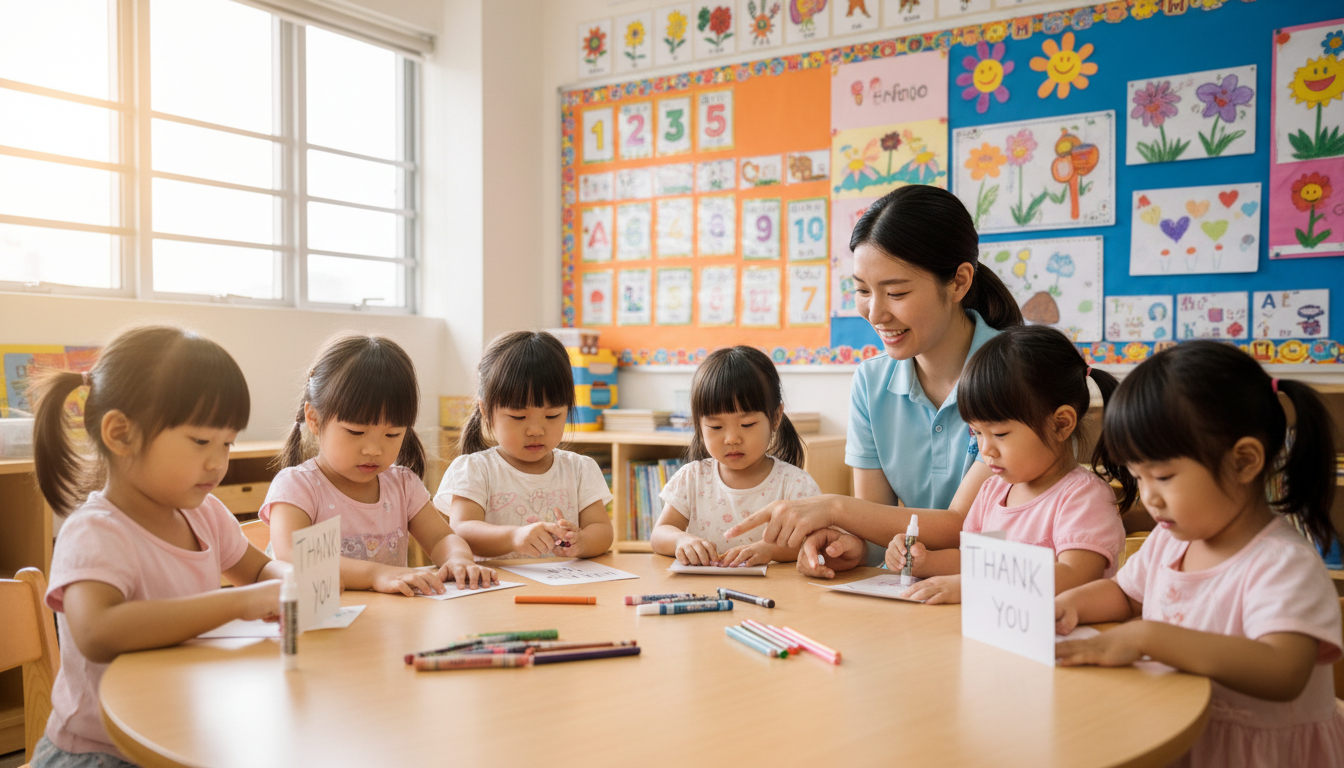
Create thank-you notes or drawings for people who have shown kindness – teachers, neighbors, church friends, or family members.
Bake cookies or prepare small gifts as thank-you gestures, involving your child in both the making and giving.
Take "thankfulness walks" where you point out and appreciate beautiful things in nature, discussing how these are gifts from God.
Gratitude Through Service
Even young children can understand that grateful hearts respond by sharing with others:
Involve your child in age-appropriate family service projects, explaining how we share our blessings with others.
Create "blessing bags" for those in need, having your child help select items and decorate the bags.
Participate in church or community service opportunities as a family, helping your child see how thankfulness extends to caring for others.
Seasonal Gratitude Traditions
Anchor gratitude practices to special times throughout the year:
Thanksgiving: Create a special gratitude tree where family members add paper leaves with things they're thankful for throughout November.
Christmas/Advent: Alongside the excitement of receiving gifts, establish traditions focused on giving and expressing thanks for the gift of Jesus.
Birthdays: Start a tradition where, alongside receiving gifts, the birthday person shares things they're thankful for from the past year.
New Year: Review the gratitude journal together, noticing patterns and growth in your child's awareness of blessings.
Cultivating Hearts of Thankfulness
As we've explored throughout this article, gratitude journaling with your 5-year-old is about much more than creating a cute keepsake – it's about nurturing a heart posture that will serve them throughout life. By establishing these simple practices early, you're helping your child develop eyes that notice blessings, a heart that appreciates goodness, and hands that respond in generosity.
Remember that gratitude, like any virtue, develops gradually through consistent practice and loving guidance. There will be days when your journaling feels profound and days when it's silly or superficial – both are valuable parts of the journey. What matters most is the consistent message that we have much to be thankful for and that our thankfulness connects us to God and others.
As your child grows in their gratitude practice, you may be surprised at the insights they share and the growth you see in their character. The simple seed of gratitude, when planted in the fertile soil of childhood and watered with consistent attention, often blooms into joy, contentment, empathy, and faith – qualities that reflect the truth, beauty, and goodness we all desire for our children.
Through gratitude journaling, you're giving your child more than an activity – you're offering them a perspective that can transform how they see and experience the world. What a beautiful gift to share together!
Begin Your Gratitude Journey Today
Looking for more ways to nurture your child's character development and faith formation? Little Olive Tree Preschool offers a holistic approach to early childhood education rooted in biblical principles through our unique Truth, Beauty, and Goodness curriculum.
With 19 Preschools islandwide, we're committed to partnering with parents to raise joyful, confident children who grow in Christ-like character.
Register your interest today to learn more about how we can support your child's journey of growth and discovery.
Little Olive Tree aims to shape Singapore's future by investing in its youngest generation. Through holistic early education and close partnership with families, we nurture resilient, values-driven children who will one day make a positive difference in society.
This content is for informational purposes only. For the most current information about our programs and services, please contact us at hello@lot.edu.sg or Whatsapp us at 80353772.