.png)


Character-Building Through Daily Routines: How Little Olive Tree Nurtures Values in Young Hearts
Table Of Contents
The Foundation of Character Building at Little Olive Tree
Morning Routines That Shape Hearts
Mealtime Moments for Character Growth
Rest and Reflection: Quiet Time Practices
Afternoon Character-Building Activities
Transitioning Home: Continuing Character Development
The Biblical Roots of Our Character Approach
Partnering with Parents in Character Formation
In the formative preschool years, character development happens not just through special lessons but in the gentle rhythm of everyday moments. At Little Olive Tree Preschool, we believe that the seemingly simple daily routines—from morning greetings to afternoon goodbyes—provide rich soil for nurturing virtues that will bear fruit throughout a child's life.
Our approach to character building is intentionally woven into the fabric of each day, creating natural opportunities for children to practice kindness, patience, responsibility, and other Christ-like qualities. Rather than viewing character education as a separate subject, we embrace it as an integral part of our 'Truth, Beauty, and Goodness' curriculum, where biblical principles guide children to see, understand, and act with virtue.
This article explores how Little Olive Tree's thoughtfully designed daily routines cultivate strong character foundations and how parents can extend these practices at home, creating a seamless connection between school and family life in nurturing young hearts that will one day bless their communities.
The Foundation of Character Building at Little Olive Tree
At Little Olive Tree Preschool, character development isn't an afterthought or a single lesson plan—it's the nurturing soil in which all learning takes root. Our distinctive Curriculum approaches character formation as a natural, integrated part of daily life, reflecting the biblical understanding that virtues are cultivated through consistent practice and gentle guidance.
"Character is formed not primarily through special lessons, but through the repeated patterns of daily life," explains our curriculum director. "When children participate in meaningful routines guided by caring teachers, they naturally absorb the values those routines embody."
This philosophy draws from Proverbs 22:6: "Train up a child in the way he should go, and when he is old he will not depart from it." At Little Olive Tree, this training happens through intentional daily practices rather than isolated character lessons.
Our character-building approach centers on three key principles:
Modeling virtues through the actions and attitudes of teachers and staff
Creating opportunities for children to practice virtues in everyday situations
Reinforcing biblical perspectives that help children understand the 'why' behind virtuous choices
These principles come to life through carefully designed daily routines that remain consistent across our 19 Preschools islandwide, ensuring that every Little Olive Tree child receives the same foundation for character growth.
Morning Routines That Shape Hearts
The morning hours at Little Olive Tree set a tone that resonates throughout the day. As children arrive, they're welcomed by name with warm smiles—a simple practice that communicates their inherent value and belonging in our community.
The Welcome Circle: Building Community and Confidence
Each day begins with our Welcome Circle, where children gather to greet one another, share briefly, and prepare their hearts for the day ahead. This routine cultivates several character virtues:
Respect – Children practice listening attentively as classmates speak, learning that each person's thoughts matter.
Courage – Taking turns to speak in the circle helps even shy children develop confidence in expressing themselves.
Gratitude – Our morning prayer time encourages children to notice and give thanks for God's gifts in their lives.
One parent shared: "My daughter used to be reluctant to speak in groups, but after six months of Welcome Circle at Little Olive Tree, she's now confidently leading family prayers at home."
Morning Helper Roles: Nurturing Responsibility
Another cornerstone of our morning routine is the assignment of classroom helper roles. Each day, children take turns serving as:
Plant waterers
Book corner organizers
Table wipers
Prayer leaders
These simple responsibilities help children experience the satisfaction of contributing to their community while developing diligence and faithfulness in small tasks—qualities Jesus highlighted in the Parable of the Faithful Servant.
"We've noticed that children who initially resist responsibility often become the most enthusiastic helpers after experiencing the joy of being trusted with a meaningful task," observes a teacher from our Bethany Presbyterian Church location.
Mealtime Moments for Character Growth
Mealtimes at Little Olive Tree transcend simple nutrition to become rich opportunities for character development. Our approach transforms eating together into a formative experience that nurtures gratitude, consideration, and self-control.
Preparing Hearts Before Food
Before eating, children participate in a brief blessing time. This practice helps them:
Pause and acknowledge the source of their food
Express thanks to God and those who prepared their meal
Develop patience by waiting until everyone is served
A simple mealtime prayer such as "God is great, God is good, let us thank Him for our food" reinforces the biblical value of gratitude while creating a moment of collective thankfulness.
Table Manners as Character Training
At Little Olive Tree, we view table manners not as arbitrary rules but as practical expressions of respect and consideration. Children learn to:
Wait for others before beginning to eat
Use "please" and "thank you" when requesting food
Engage in pleasant conversation at appropriate volumes
Clean up their eating area after finishing
"When children understand that good manners are about caring for others rather than just following rules, they're more motivated to practice these behaviors," explains a teacher from our Foochow Methodist Church center.
Parents often report that these mealtime practices carry over into home life, with children spontaneously initiating pre-meal prayers or helping clear the table without prompting.
Rest and Reflection: Quiet Time Practices
In our busy world, the ability to be still, reflect, and listen is increasingly rare yet vitally important. Little Olive Tree's daily rest periods intentionally cultivate these qualities while providing needed physical restoration.
The Sacred Space of Rest
Our approach to rest time draws inspiration from Psalm 46:10: "Be still, and know that I am God." Children learn that quietness isn't just about physical rest but creates space for listening to God and processing their thoughts and feelings.
During rest time, children:
Lie quietly on individual mats with soft, calming music
Listen to gentle readings from children's Bible stories
Practice deep breathing techniques suitable for young children
Learn that rest is a gift from God, not a punishment
This daily practice develops self-regulation skills while nurturing a peaceful spirit—qualities that serve children well throughout life.
Transition from Rest to Activity
The transition from rest to afternoon activities provides another opportunity for character growth. Children practice:
Patience in waiting for others to awaken
Helpfulness in rolling up their mats
Thoughtfulness toward friends who need more rest
"We've observed that children who initially resist rest time often become its strongest advocates as they experience the refreshment it brings," notes a veteran teacher. "They're learning to value stillness in a world that rarely slows down."
Afternoon Character-Building Activities
Afternoon hours at Little Olive Tree include intentional activities that reinforce character development through engaging, age-appropriate experiences. These activities build upon morning foundations while introducing new opportunities for virtue practice.
Collaborative Projects: Learning to Work Together
Afternoon project time frequently involves collaborative work that requires children to practice:
Taking turns with special materials
Sharing ideas respectfully
Compromising when visions differ
Celebrating others' contributions
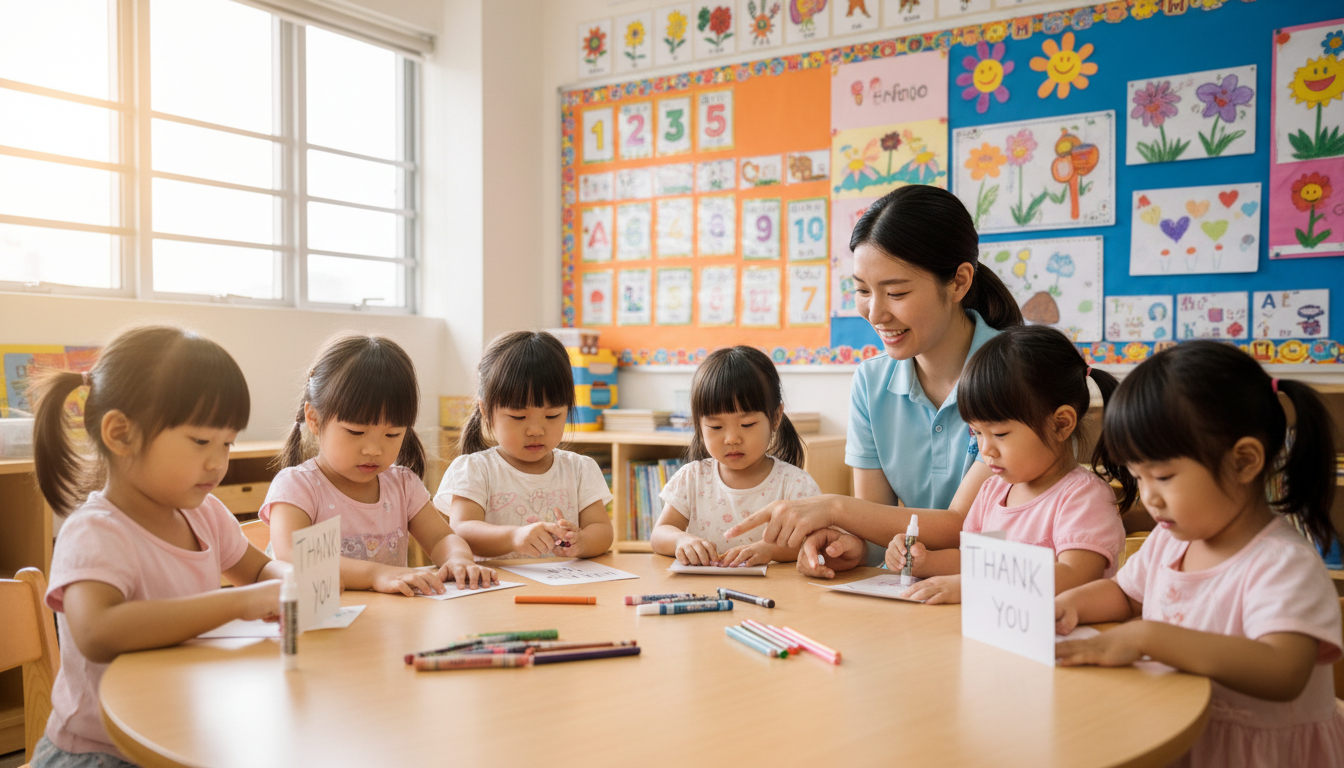
One recent project involved creating a "Kindness Garden" where children worked together to paint paper flowers, each representing an act of kindness they had witnessed or performed. This activity reinforced the biblical principle that kind actions, like flowers, bring beauty to the world.
Literature and Storytelling with Moral Foundations
Story time is another afternoon staple that nurtures character through carefully selected literature. Teachers choose books that:
Present virtues in age-appropriate narratives
Feature characters making difficult but right choices
Connect to biblical principles without being didactic
Prompt thoughtful discussion about character choices
After stories, simple questions like "How did the character show courage?" or "What might you have done in that situation?" help children internalize the virtues portrayed.
Transitioning Home: Continuing Character Development
The end of the school day presents unique opportunities for reinforcing character lessons as children prepare to return home. Our closing routines are designed to help children reflect on their day and carry learned virtues into their family environment.
The Gratitude Circle: Ending with Thankfulness
Before departure, children gather briefly to share one thing they're thankful for from their day. This practice:
Helps children develop the habit of noticing blessings
Encourages positive reflection rather than complaint
Reinforces the biblical value of thankfulness in all circumstances
"Even on challenging days, finding something to be thankful for shifts children's perspective in powerful ways," observes a teacher. "We're seeing children spontaneously practicing gratitude throughout the day after months of this simple routine."
Friendship Farewells: Practicing Kindness in Goodbyes
How we say goodbye matters. Children at Little Olive Tree learn to:
Make eye contact and use friends' names when saying goodbye
Express specific appreciations like "Thank you for playing with me today"
Leave with clean-up completed as an act of responsibility
These practices ensure that each day ends with positive connection, reinforcing the value of each relationship in our community.
The Biblical Roots of Our Character Approach
Little Olive Tree's character development through daily routines is deeply rooted in biblical understanding. We believe virtues aren't simply social skills but reflections of God's character that we're called to develop through Christ's example.
The Fruit of the Spirit in Daily Life
Galatians 5:22-23 describes the fruit of the Spirit as "love, joy, peace, patience, kindness, goodness, faithfulness, gentleness, and self-control." Our daily routines create natural opportunities for children to practice these qualities:
Love through helping friends who are struggling
Joy in celebrating others' achievements
Peace during conflict resolution practices
Patience while waiting for turns
Kindness in morning greetings and thoughtful words
Goodness through honest actions even when no one is watching
Faithfulness in completing classroom responsibilities
Gentleness with classroom materials and living things
Self-control during transitions between activities
"Rather than teaching these virtues as abstract concepts, we point them out when children naturally demonstrate them," explains our curriculum coordinator. "This helps children connect biblical teaching with their lived experience."
Character Formation as Spiritual Formation
At Little Olive Tree, we understand character development as inseparable from spiritual formation. Our daily routines are designed not just to shape behavior but to nurture children's understanding of God's love and character.
Simple practices like classroom prayers, expressions of forgiveness, and celebrations of growth help children see the connection between their daily choices and their spiritual journey.
Partnering with Parents in Character Formation
We believe character development is most effective when school and home work in harmony. While Little Olive Tree provides a strong foundation through daily routines, parents are the primary influencers in children's character formation.
Home Activities That Reinforce School Values
Parents can extend character development at home through simple activities such as:
Family Mealtimes: Incorporating similar blessing practices and conversation starters used at school
Home Helper Roles: Creating age-appropriate responsibilities that parallel classroom helper systems
Bedtime Reflections: Adapting our Gratitude Circle concept for evening family sharing
Consistent Routines: Establishing predictable patterns that provide security and practice opportunities
"When children experience similar expectations and practices at home and school, the character lessons become more deeply ingrained," notes our family engagement coordinator.
Bi-Annual Parent Communication
Parents receive updates on character development focus areas twice yearly during our parent-teacher conferences. These sessions provide opportunities to:
Discuss character strengths observed in their child
Share strategies for addressing character growth areas
Ensure alignment between school and home approaches
These conversations focus not just on academic progress but on the whole-child development that is central to Little Olive Tree's mission.
Cultivating Hearts That Will Flourish
At Little Olive Tree Preschool, we believe that character formation happens most effectively not through isolated lessons but through the intentional rhythms of daily life. Through our carefully designed routines—from morning welcome circles to afternoon gratitude practices—children don't just learn about virtues; they live them.
These daily practices, grounded in biblical principles and implemented with love, create fertile soil for young hearts to develop the strength of character that will serve them well beyond their preschool years. As the Proverb reminds us, "Watch over your heart with all diligence, for from it flow the springs of life" (Proverbs 4:23).
By partnering with parents to extend these character-building routines into home life, we create a seamless environment where children can grow into individuals who not only succeed academically but who embody the truth, beauty, and goodness that will make them a blessing to their communities.
Just as the olive tree in Scripture symbolizes beauty, abundance, and flourishing, our prayer is that the character seeds planted through these daily routines will grow into lives of purpose, virtue, and faith that bear fruit for generations to come.
Would you like to learn more about how Little Olive Tree nurtures character development through our biblically-based curriculum? Register your interest to schedule a visit to one of our 19 preschools islandwide and see our character-building routines in action.
Little Olive Tree aims to shape Singapore's future by investing in its youngest generation. Through holistic early education and close partnership with families, we nurture resilient, values-driven children who will one day make a positive difference in society.
This content is for informational purposes only. For the most current information about our programs and services, please contact us at hello@lot.edu.sg or Whatsapp us at 80353772.